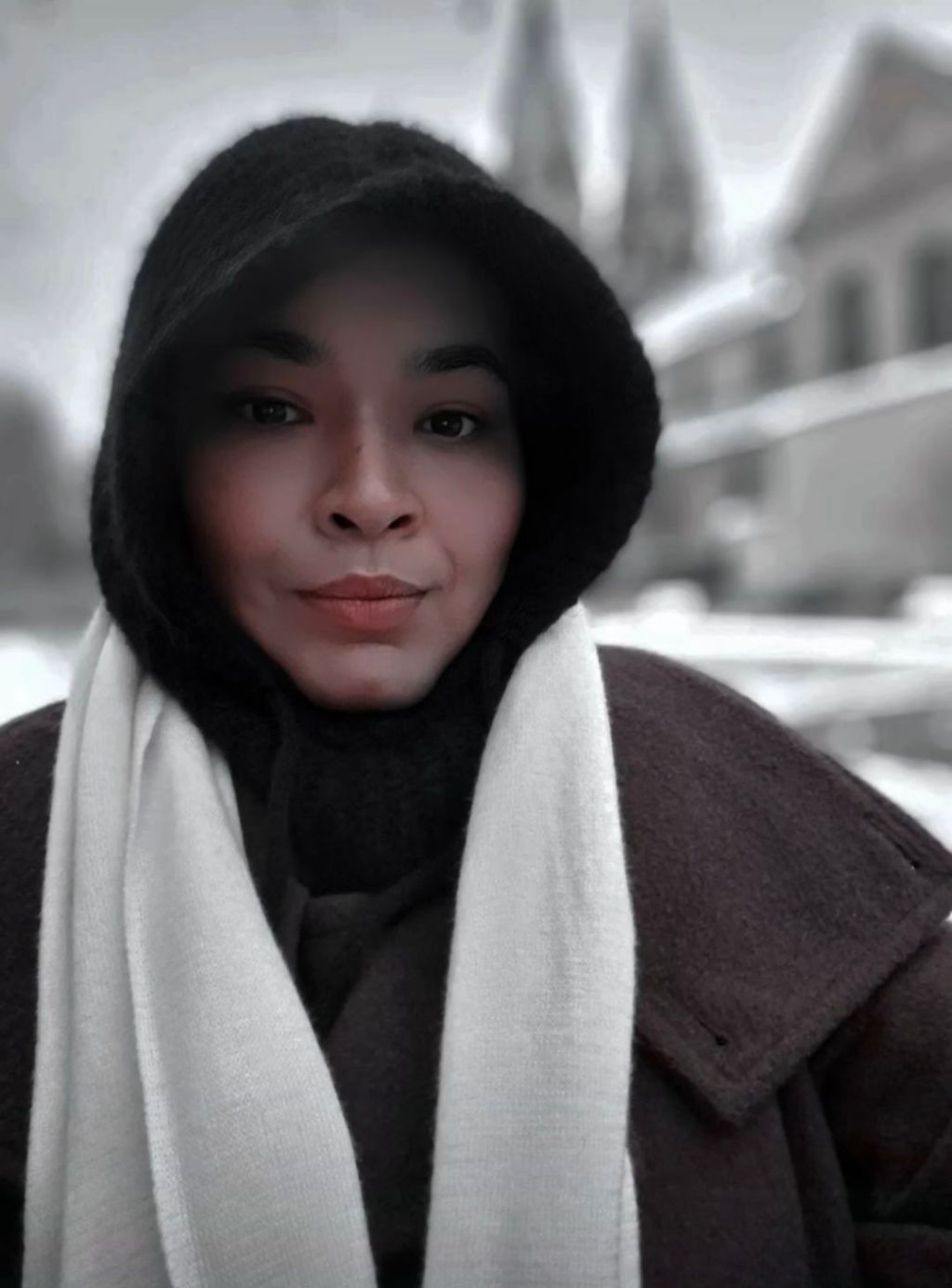

January has presented itself to me as a month of profound, almost initiatory transition. Not a simple change of calendar, but a threshold. The arcana that governs it—at least for me—is Death, and it could not be more precise. This arcana—so often misunderstood—does not speak of a literal ending, but of an inevitable transformation: the need to let forms, certainties, bonds and identities die when they can no longer accompany us into what lies ahead. Death is the arcana of forced passage, of a detachment that is not always chosen, but which proves absolutely necessary in order to be reborn.
I feel that January marks the passage between a version of myself that still held on to certain securities and hopes—emotional, identitarian, territorial—and another that is beginning to exist without them. I have had to say goodbye to people who were fundamental in my emotional life, to great loves with whom I tied my identity for years, to my country, and to certain forms of family support which, though invisible, gave me the illusion that I was not entirely alone. Today I am beginning to conceive—though not without vertigo—the idea that I am walking alone, guided by a radical responsibility towards myself. I am getting to know this new self, inevitably comparing her to past versions whom I honour and love, but with the clear awareness that I can no longer inhabit them. Not without fear, not without uncertainty, and sometimes with the desire for everything to return to how it once was, even while knowing that this is impossible.
In the midst of this process, in mid-December last year, I received news that I desperately needed—news that confirmed, from another plane, that something new was taking shape. The administration of my master’s degree informed me that I had been selected for one of the Vargas Llosa Chair mentorships, a distinction awarded to very few people on the basis of the quality of their final project and academic record. The mentorship involves being guided by a renowned writer in the development of a literary project, whether an academic work or a personal manuscript. In my case, this guidance will focus on shaping and refining my first book.
The Vargas Llosa Chair is an international cultural and academic initiative devoted to the promotion of literature, critical thought and intellectual creation within the Spanish-speaking world. Founded around the figure and legacy of Mario Vargas Llosa, its aim is to encourage the study, dissemination and support of new literary voices, as well as dialogue between established writers, academics and emerging creators.
Shortly afterwards, I learned who my mentor would be: Juan Carlos Chirinos. A Venezuelan writer based in Madrid, essayist and academic, Chirinos is one of the most solid voices in contemporary Venezuelan narrative. Holding a PhD in Hispanic American Literature and educated between Venezuela and Spain, he has developed, since the late 1990s, a career that combines literary creation, university teaching, criticism and essayistic reflection. His work spans short fiction—of which he is an undisputed reference—novels, biography and essays, all marked by uncommon formal rigour and intellectual density.
I arrived at our first meeting filled with nerves and uncertainty; I did not know what to expect. I left, however, deeply impressed. Chirinos is a scholar in the fullest sense of the word: his literary knowledge, his reading acuity and his critical demands coexist with an unusually clear pedagogical approach. His trajectory as a short-story writer—with books such as Leerse los gatos, Homero haciendo zapping or La sonrisa de los hipopótamos—and as a novelist—finalist for the Rómulo Gallegos Prize with El niño malo cuenta hasta cien y se retira—translates into an extraordinarily precise gaze on language, structure and literary tradition.
He has recommended numerous readings, both for the project we are working on and for other personal and professional interests. One of the books he suggested, which I am currently reading, is Seven Dreams by Jorge Luis Borges, a work that resonates intimately with this moment of transition, symbolism and search. I am also continuing with the writing exercises he has assigned, with the aim of refining the material I already had—not through superficial correction, but through a deep revision of its internal architecture.
Alongside this creative and intellectual process, January has also been a month of therapeutic exploration. On the recommendation of my trusted therapist, I began Theta Healing therapy for the first time—a technique that works at the level of the deep unconscious, seeking to identify and reprogramme internal patterns that are no longer functional. It is based on the premise that many of our behaviours and blockages operate from unconscious layers we rarely question. I am still processing the experience and do not yet have a definitive opinion, but I do sense that it has opened a space of observation that will require time and honesty.
Another of this month’s central transformations has been my relationship with food. January, with its energy of beginnings and renewed intentions, lent itself almost naturally to this. For years I practised fasting, and it would be unfair to deny that at first it brought me significant benefits, both physical and health-related. Over time, however, my body—and especially my metabolism—adapted to that pattern. I reached a point of stagnation and hormonal stress that was no longer useful or sustainable.
Today I am relearning how to eat. How to nourish myself. I understand nutrition not merely as the act of consuming food, but as a broader form of relationship with the body and with life. I am learning to give my organism what it needs, to distribute nutrients throughout the day, and to detach myself from the deeply ingrained idea that eating is something negative. This process has involved confronting guilt, fear and long-held beliefs. As I observe more closely what I eat, I also observe my relationship with food and how, all too often, we project onto it our internal conflicts, our lacks and our anxieties.
Within this same climate of searching, my first encounter with Kabbalah arrived—more through meaningful coincidence than chance. Through a psychologist who, alongside her clinical practice, teaches courses on this system of thought, I began to explore its foundations. Although Kabbalah had been an unfamiliar territory to me until then, it quickly connected with ideas I had already been developing and with concepts I know well thanks to my prior interest in Jung and archetypes. A single class was enough for me to realise that this symbolic system dialogues deeply with the knowledge I have been acquiring over recent years.
This month has also found me preparing and sending letters—many letters. Letters containing intentions, proposals and personal and professional commitments, whose outcomes I do not yet know, but which I hope to see materialise before too long. Sending them has been, in itself, a gesture of openness: allowing what is in gestation to enter the world without guarantees, but with honesty.
Finally, January has been a month of returning to the body through the everyday. I have begun to move more, to inhabit my physical energy with greater awareness. Even small acts of self-care have become minimal yet meaningful rituals—reminders that this process of transformation does not take place solely in the mental or spiritual realm, but also in matter.
Thus, January comes to a close as a month of passage—of necessary farewells and fragile yet potent beginnings. A month in which many things have had to die so that others, still without clear form, may begin to exist. And yet, I continue to miss. I miss deeply. Yes, I still do. I am not afraid to express my vulnerability, because it is one of my greatest strengths.
In more symbolic terms, I feel that I am inhabiting what many myths call the in-between night: the desert, the passage, that space of death in which resurrection is not yet visible. My former life is no longer possible, but the new one has not yet taken shape. That void generates insecurity, yes, but also an unexpected creative potency. I find myself in a state of lucid mourning, of de-identification and conscious reconstruction, traversed by a real—though not desperate—solitude, and by a transformation that still hurts. I am not lost. I am in between. And that “in between”, though uncomfortable, is fertile, honest and profoundly human.

 Trilingual Blog
Deja un comentario