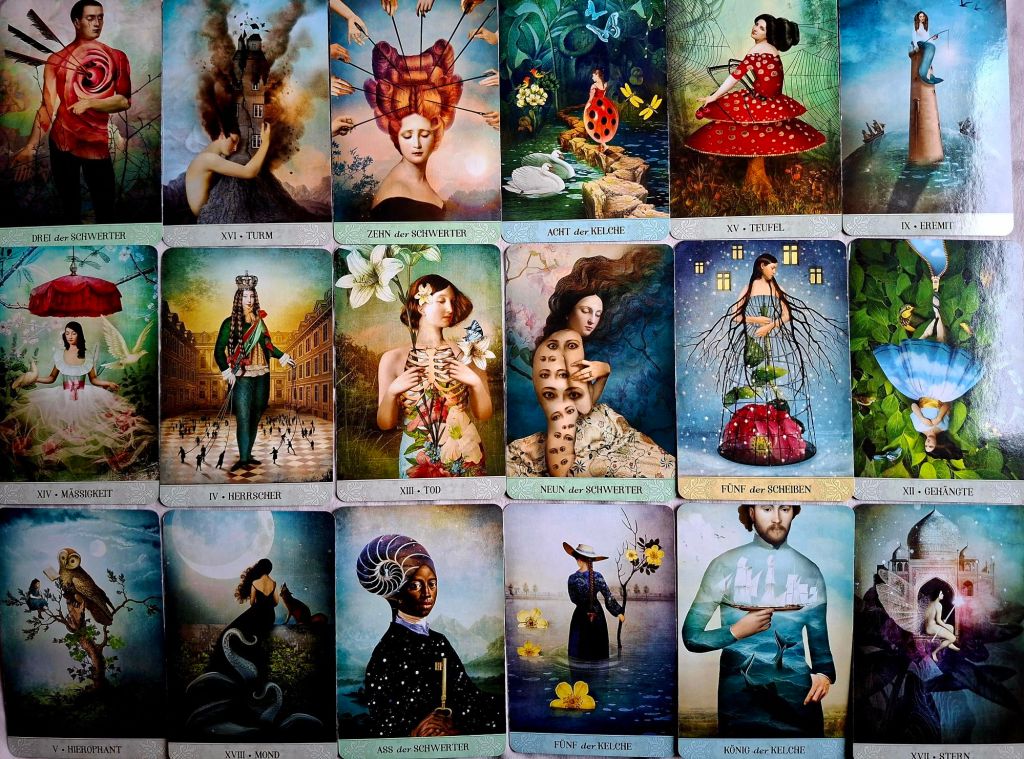

You wake among remnants that are not yours. At first you think you’re dreaming; the air is dense and it’s hard to breathe. You sit up and see inert shapes around you, abandoned lives. To stand, you have to push them aside one by one, and each touch leaves a mark, a memory you don’t know is yours.
When at last you get up, you understand: you’re alone (The Hermit). You’ve climbed from an inner abyss with dirty hands and a fragmented mind. One who has been silent for so long does not return with answers, but with new questions and a body learning to hold them in silence.
It comes to you like a tide rising when the harbour lies empty. An invisible hand turns off the switches of habit and leaves you alone with your breathing. The dark night is a developing room where your life, that photograph you took for granted, begins to sketch itself anew (The Tower).
You turn the volume down. Was it really you? You no longer want to keep mistaking yourself for noise. You withdraw from the feast, close the laptop, call off the conquest for an afternoon. You enter yourself as one enters a hermitage in the middle of the moor: The Hermit offers you his lamp. With the Eight of Cups you walk away still feeling, yet resolved to stop feeling. You think you can and must control everything that happens inside and out. You leave cups still full on the table and go out under the moon. You make yourself a rite of sobriety with Temperance: a drop of water on the stone each day. The routine you believe saves you begins to bury you.
Then the drought falls without asking permission. Coffee tastes like water, the songs come apart, prayer is a closed room. The Four of Cups sits you before a sky without birds: everything seems flat. With the Five of Pentacles you find yourself out in the open—provider without provision, armour with rust—and you’re ashamed to ask for shelter. You thought that, in confronting solitude, you’d feel miserable; the concept exceeds your expectations. It’s not only orphanhood and cold in the heart: it is torment, guilt, anguish, desolation, repetitive thoughts. You feel orphaned of the world.
The Hanged Man takes you by the ankles: stop, look at the world upside down; you are not what you produce. Life taught you that you are worth only if you pay. The Moon thickens the edges: you can’t tell the path from the puddle. Are your feelings true, are you imagining it? Did the rest carry on with their lives? Is there anyone else out there who fights the same monsters as you, who remembers you, who loves you? Still, in spite of everything? Yes. But you won’t know until you cross the threshold of fear and doubt.
Then the tender man you learnt to hide appears clumsily: King of Cups (reversed), emotions without a channel. This time you don’t rescue anyone; you accept being rescued by a silence larger than you.
Now the crisis is no longer of habits, but of axis. You surprise yourself dismantling your altars: truths that crowned you, pocket dogmas, private chapels, what will people say? The Emperor (reversed) leaves the chair: to govern is not to cling. The Hierophant (reversed) invites you to unlearn your personal catechisms: what you thought was a ladder might have been a cage.
You return to The Hanged Man—another surrender, deeper—and, on the edge of that abandonment, the right tool descends: Ace of Swords. Clarity, certainty, faith? It’s not a sword to defeat anyone, but to separate the living from the dead; to cut the cords of self-deception with a precision that does not humiliate. Justice balances the scales: on one side your will, on the other the truth; you breathe until they weigh the same. Your “yes” starts to sound different: clean, without overacting.
And then, without a vote, the house breaks. The Tower again. The lightning of light that destroys your certainties, your Ego… and you watch bricks fall that were called “I”. You are not the CV headshot, nor the deep voice in the classroom, nor the teacher, nor the honourable husband, nor the tired hero of the inherited tale. In the dust the gaoler appears with your face: The Devil shows you the shackles polished over years—control, image, perfection, power—and you don’t look away. Amid the rubble there is a bird that was struck, a dove that still believes in you and sees you beyond the masks you’ve worn all your life. It was about to die in the collapse, but like you it has passed through all these cards and lived its own dark night of the soul.
You were cruel, it’s true. Impulsive. You hurt people and you hurt yourself (like Achilles dragging Hector’s body); you were also hurt, and it’s hard for you to forgive completely. You’ve been a coward, it’s true (like the lover who reads but does not reply). You don’t deny it: you hold it without excuses, because forgiveness begins when the alibi runs out. And you know all these attitudes are, in some way, human; they’ve only been laid bare. Don’t you deserve another chance? You do. We do. All of us. All the more if you already see it and the heart keeps insisting on beating, even though you still want to tame it.
The Nine of Swords is the vigil where the chest weighs more than the body; you learn to cry at dawn without hiding from yourself. Then Death does its honest work: it does not kill; it prunes. It leaves you stripped to the bone, yes, but of a tree. And when no theatre remains, you hear a trumpet that comes from within: Judgement. You don’t have to prove anything, only raise your hand from beneath the rubble and say: “Here I am. I accept being born,” and forgive yourself. Even if you don’t believe it yet, you deserve it.
When the Ten of Swords arrives it is not to sign your defeat, but to show you the limits of your resistance: you are tired of fighting what you feel, of bolting the door from the inside while the waters rise. You see yourself lying there, run through by your own demands, and then the true thing happens: you accept. Acceptance is not surrendering to pain; it is to cease fighting it. It is allowing the emotions—those waves you feared—to soak you to the bone so that, at last, they stop dragging you. And you forgive yourself: you remove, one by one, the swords you drove into yourself for not being perfect, for having failed, for having been afraid. That forgiveness is a hand that helps you to rise; the blood circulates again, the air comes back in. Freed from the inner war, you rise lighter: you carry on… No one has won, but you no longer need to. It is only to yield and continue.
The din still resounds within you when everything falls silent.
The ruins smoulder in your chest: broken words, broken promises, dust of what was once certainty.
With trembling hands you remain standing—barely—like a soldier who does not know whether the war has ended. Each step weighs as if you were dragging the stones of your own fallen fortress. Thoughts crowd like crows: if you said this, if you didn’t do that… None brings comfort. Guilt scratches at your eyes and insomnia is a shoreless ocean.
Then you fall to your knees. There is nothing left to defend. Neither pride, nor plans, nor masks. Only the weariness and a question hanging in the air: what remains of you when everyone else leaves and the ornaments fall?
In that silence, among the ruins of yourself, you feel something tiny: a warm breath. It is the insistent heartbeat of one who, without knowing why, remains alive.
Then, The Star is that thread of water you find in the desert and, without thinking, you drink. The Sun rises slowly and you place your shadow before you without shame: you can look at it because it no longer rules. The masculine in you learns a sweetness that is non-negotiable: King of Cups with a steady pulse, able to contain without hardening. Temperance returns for the pleasure of harmony: to mix, mix, mix—action and rest, speech and silence—until life tastes like home. And when you look back, you don’t see a flawless record; you see a journey. The World opens like a square and you walk unhurried, knowing that to belong is not to fit in: it is to breathe whole, until it stops hurting.
If they were to ask you what happened to you, you’d say something like this: they took away the lamp so that you could discover fire; they took away the stage to give you back the house; they returned your heart to your chest. The dark night of the soul was not a man’s defeat, but an entire, real passage: you learnt to hold without clenching, to protect without armouring yourself, to move forward without having to win.
Because the night didn’t defeat you: it taught you to give light.

La noche oscura del alma — una mezcla de sombras y agua
Despiertas entre restos que no son tuyos. Al principio crees que sueñas; el aire es denso y te cuesta respirar. Te incorporas y ves formas inertes a tu alrededor, vidas abandonadas. Para ponerte en pie tienes que apartarlas una a una, y cada contacto te deja una marca, un recuerdo que no sabes si es tuyo.
Cuando por fin te levantas, entiendes: estás solo (El Ermitaño). Has subido desde un abismo interior con las manos sucias y el pensamiento fragmentado. Quien calla tanto tiempo no vuelve con respuestas, sino con preguntas nuevas y un cuerpo que aprende a sostenerlas en silencio.
Te llega como marea que sube cuando el puerto queda vacío. Una mano invisible apaga los interruptores de costumbre y te deja a solas con tu respiración. La noche oscura es un cuarto de revelado donde tu vida, esa fotografía que dabas por hecha, empieza a dibujarse otra vez (La Torre).
Bajas el volumen. ¿De veras fuiste tú? Ya no quieres seguir confundiéndote de ruido. Te apartas del festín, cierras el portátil, cancelas la conquista por una tarde. Entras en ti como quien entra en una ermita en mitad del páramo: El Ermitaño te ofrece su lámpara. Con el 8 de Copas te alejas aún sintiendo, pero decidido a dejar de hacerlo. Piensas que puedes y debes controlar todo lo que ocurre dentro y fuera. Dejas en la mesa copas todavía llenas y sales bajo la luna. Te haces rito de sobriedad con La Templanza: una gota de agua sobre la piedra cada día. La rutina que crees que te salva empieza a sepultarte.
Entonces la sequía cae sin pedir permiso. El café sabe a agua, las canciones se deshilachan, la oración es una habitación cerrada. 4 de Copas te sienta frente a un cielo sin pájaros: todo parece plano. Con 5 de Oros te ves a la intemperie —el proveedor sin provisión, la armadura con óxido— y te avergüenzas de pedir refugio. Creías que al confrontarte con la soledad te sentirías miserable; el concepto supera tus expectativas. No es solo orfandad y frío en el corazón: es martirio, culpa, angustia, desolación, pensamientos repetitivos. Te sientes huérfano de mundo.
El Colgado te toma por los tobillos: detente, mira el mundo al revés; no eres lo que produces. La vida te enseñó que solo vales si lo pagas. La Luna espesa los contornos: no se distingue la senda del charco. ¿Tus sentimientos son verdaderos, lo estás imaginando? ¿El resto siguió con su vida? ¿Hay alguien más ahí afuera que luche contra los mismos monstruos que tú, que te recuerde, que te ame? ¿Aún, a pesar de todo? Sí. Pero no lo sabrás hasta cruzar el umbral del miedo y la duda.
Entonces, el varón tierno que aprendiste a ocultar aparece con torpeza: Rey de Copas (invertido), emociones sin cauce. No rescatas a nadie esta vez; aceptas ser rescatado por un silencio más grande que tú.
Ahora la crisis ya no es de hábitos, sino de eje. Te sorprendes desmontando tus altares: verdades que te coronaban, dogmas de bolsillo, capillas privadas, ¿qué dirá la gente? El Emperador (invertido) deja la silla: gobernar no es aferrarse. El Sumo Sacerdote (invertido) te invita a desaprender tus catecismos personales: lo que pensabas escalera quizá era jaula.
Vuelves a El Colgado —otra rendición, más honda— y, en el filo de ese abandono, desciende la herramienta justa: As de Espadas. Claridad, certeza, ¿fe? No es espada para vencer a nadie, sino para separar lo vivo de lo muerto; para cortar los cordeles del autoengaño con una precisión que no humilla. La Justicia equilibra los platos: de un lado tu voluntad, del otro la verdad; respiras hasta que pesen lo mismo. Tu “sí” empieza a sonar distinto: limpio, sin sobreactuación.
Y entonces, sin votación, se quiebra la casa. La Torre otra vez. El relámpago de luz de que destruye tus certezas, tu Ego… y ves caer ladrillos que se llamaban “yo”. No eres la foto del currículum, ni la voz grave del salón, ni el profesor, ni el marido honorable, ni el héroe cansado del cuento heredado. En el polvo aparece el carcelero con tu rostro: El Diablo te muestra los grilletes pulidos por años —control, imagen, perfección, poder— y no miras a otro lado. Entre los escombros, hay un ave que fue golpeada, una paloma que aún cree en ti y te ve más allá de las máscaras que has vestido toda tu vida. Estuvo a punto de morir en el colapso, pero al igual que tú ha pasado por todas estas cartas y vivido su propia noche oscura del alma.
Fuiste cruel, es verdad. Impulsivo. Heriste gente y te heriste a ti mismo (como Aquiles arrastrando el cuerpo de Héctor); también te hirieron, y te es difícil perdonar del todo. Has sido cobarde, es cierto (como el amante que lee pero no responde). No lo niegas: lo sostienes sin excusas, porque el perdón empieza cuando se acaba la coartada. Y sabes que todas estas actitudes son, de algún modo, humanas; solo han quedado al descubierto. ¿No mereces otra oportunidad? La mereces. La merecemos. Todos. Más aún si ya lo ves y el corazón insiste en latir, aunque aún quieras domarlo.
9 de Espadas es la vigilia donde el pecho pesa más que el cuerpo; aprendes a llorar de madrugada sin esconderte de ti. Luego La Muerte hace su trabajo honesto: no mata; poda. Te deja en hueso, sí, pero de árbol. Y cuando ya no queda teatro, escuchas una trompeta que viene del interior: El Juicio. No tienes que demostrar nada, solo levantar la mano desde debajo de los escombros y decir: “Aquí estoy. Acepto nacer” y perdonarte. Aunque aún no lo creas, lo mereces.
Cuando llega el 10 de Espadas no es para firmar tu derrota, sino para mostrarte el límite de tu resistencia: estás cansado de pelear contra lo que sientes, de atrancar la puerta por dentro mientras las aguas suben. Te ves tendido, atravesado por tus propias exigencias, y entonces ocurre lo verdadero: aceptas. Aceptar no es rendirte al dolor; es dejar de luchar contra él. Es permitir que las emociones —esas olas que temías— te mojen hasta los huesos para que, por fin, dejen de arrastrarte. Y te perdonas: te quitas una a una las espadas que te clavaste por no ser perfecto, por haber fallado, por haber tenido miedo. Ese perdón es una mano que te ayuda a incorporarte; la sangre vuelve a circular, el aire vuelve a entrar. Liberado de la guerra interior, te levantas más ligero: continúas… Nadie ha ganado, pero ya no necesitas. Solo es rendirte y seguir.
El estruendo aún te resuena dentro cuando todo se queda en silencio.
Las ruinas humean en tu pecho: palabras partidas, promesas rotas, polvo de lo que un día era certeza.
Con las manos temblando sigues en pie —apenas— como un soldado que no sabe si la guerra terminó. Cada paso pesa como si arrastraras las piedras de tu propia fortaleza caída. Los pensamientos se te amontonan como cuervos: si dijeras esto, si no hicieras aquello… Ninguno trae consuelo. La culpa te araña los ojos y el insomnio es un océano sin orilla.
Entonces caes de rodillas. No queda nada que defender. Ni orgullo, ni planes, ni máscaras. Solo el cansancio y una pregunta suspendida en el aire: ¿qué queda de ti cuando todos los demás se van y los adornos caen?
En ese silencio, entre los escombros de ti mismo, sientes algo diminuto: un soplo tibio. Es el latido insistente de quien, sin saber por qué, sigue vivo.
Luego, La Estrella es ese hilo de agua que encuentras en el desierto y, sin pensar, bebes. El Sol sube despacio y colocas tu sombra frente a ti sin vergüenza: puedes verla porque ya no manda. El masculino en ti aprende una dulzura que no se negocia: Rey de Copas con el pulso firme, capaz de contener sin endurecerse. La Templanza vuelve por el placer de la armonía: mezclar, mezclar, mezclar —acción y reposo, decir y callar— hasta que la vida sepa a casa. Y cuando miras atrás, no ves un expediente impecable; ves un viaje. El Mundo se abre como una plaza y caminas sin prisa, sabiendo que pertenecer no es encajar: es respirar entero, hasta que deje de doler.
Si te preguntaran qué te ocurrió, dirías algo así: te quitaron la lámpara para que descubrieras el fuego; te quitaron el escenario para devolverte la casa; te devolvieron el corazón al pecho. La noche oscura del alma no fue una derrota de hombre, sino un pasaje entero y real: aprendiste a sostener sin apretar, a proteger sin blindarte, a avanzar sin tener que ganar.
Porque la noche no te venció: te enseñó a alumbrar.
 Trilingual Blog
Deja un comentario