🇬🇧 English version below

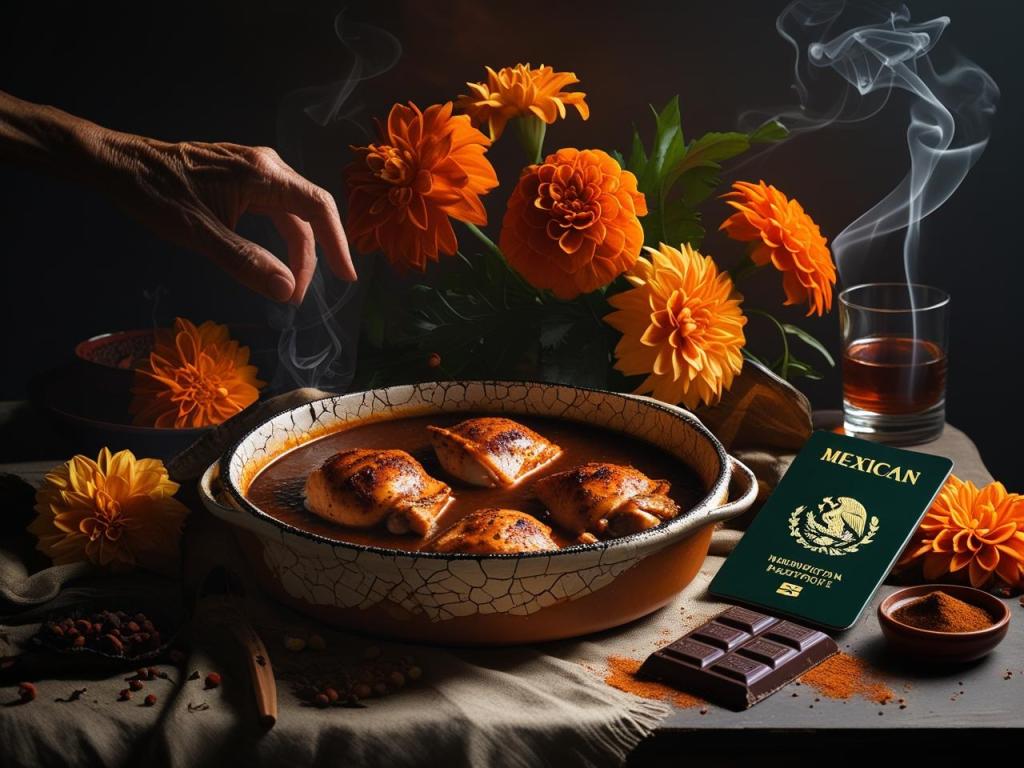
Este texto es una receta imposible y, al mismo tiempo, un mapa íntimo. Cazuela de identidades juega con el lenguaje de la cocina para explorar el desarraigo, la migración y la memoria. Cada ingrediente evoca un pedazo de infancia, de duelo o de celebración; cada instrucción mezcla teoría y entraña, frontera y hogar. Surge como resultado de mi participación en un concurso sobre Instrucciones y lo escribí a propósito de que este mes de septiembre se celebra la Independencia de México. Desde mi lugar en la diáspora, viviendo en el extranjero, me interesa reflexionar sobre cómo las raíces se transforman y cómo la identidad se cocina una y otra vez en la distancia.
- Reúne las especias del desarraigo. Escarba en los bolsillos de tu infancia hasta hallar granos de maíz azul, un par de sílabas con olor a cilantro, la carcajada de tu abuela encurtida en sal. Agrega un puño de nostalgia recién molida: pica como chile de árbol, conserva la lengua despierta.
- Elige la cazuela correcta: tu propio cuerpo. Que sea barro quemado por soles ajenos, con grietas donde todo se filtra. Colócala sobre el comal burocrático —ese mostrador donde te venden visas al peso— y déjala sudar hasta que la piel sepa a aduana.
- Macera el idioma en cacao amargo. Parte tu lengua en dos, como tablilla de chocolate: una mitad en la voz materna, otra en el alfabeto prestado. Déjalas derretir juntas; la liminidad comienza cuando los fonemas hacen remolino y ningún sabor es puro.
- Añade semillas de cempasúchil. Son soles diminutos que no caen del cielo: se abren en la sombra, iluminan el camino a los muertos y a los vivos sin patria. Espárcelos sobre la mezcla; teñirán todo de un naranja que huele a ofrenda y a carretera.
- Tuesta la contradicción. En un molcajete tritura orgullo con miedo, fe con rabia, “ni de aquí, ni de allá”. Golpea hasta que el metate cante; el sonido es gluten identitario, resiste cualquier frontera.
- Vierte la salsa de limbo. Una cucharada basta para que la mezcla nunca cuaje del todo; sin ese temblor, el platillo se volvería costumbre.
- Sella el guiso con humo de diáspora. Quema hojas de pasaporte viejo —las que aún guardan sellos borrosos— y deja que el papel arda sobre la olla. El perfume resultante sabe a aeropuerto al amanecer: dulce, metálico, irrepetible.
- Revuelve con una gaviota de sol. Cuando aparezca, su plumaje blanco removerá los bordes sin romperlos. Si no llega, invoca su vuelo leyendo en voz alta el nombre de quien te acompañó un tramo y luego se esfumó. El cielo responde a las ausencias.
- Incorpora mole de Nepantla. Mezcla 32 ingredientes imposibles: almendra, canela, duda, euforia, rezos en francés, insultos en luxemburgués. Deja que chisporrotee; cada burbuja es una frontera borrosa entre la herida y la fiesta.
- Cocina a fuego de duelo lento. La hornilla debe arder con brasas de cartas sin respuesta, abrazos que se quedaron en tránsito, padres que envejecen a contratiempo. Mantén la tapa medio abierta; el vapor trae historias que no caben en ninguna estadística.
- Cuando el fondo comience a pegarse, raspa con ternura. Allí se forma el chicharrón del recuerdo, crocante y oscuro. No lo deseches: es calcio para la memoria, pegamento para las fisuras del yo.
- Espolvorea migas de teoría. Di “liminalidad” en voz alta, deja que la palabra chisporrotee sobre el caldo. Añade “diaspora” como si fuera orégano y “nepantla” como si fuera sal. Las letras no se disuelven, flotan como trozos de isla en la sopa.
- Prueba la sazón con la yema de un dedo migrante. Si arde, vas bien: la picadura confirma que aún posees nervios. Si sabe demasiado a patria, falta exilio; si sabe solo a futuro, falta raíz. Ajusta hasta que ninguna coordenada sea absoluta.
- Sirve en platos desiguales. Ofrécelo primero a los colgados del umbral. Después repártelo entre locales que confunden exotismo con raíces.
- Acompaña con pan de incertidumbre tibio. Rompe la hogaza con las manos; que las migas caigan como visas rechazadas. Cada bocado es un permiso temporal: dura lo que dura el crujido.
- Decora con plumas de búho imaginario. Aunque te asusten las aves nocturnas, su plumaje absorbe la oscuridad y la vuelve mirada. Coloca una sobre cada ración: amuleto contra la tentación de la certeza.
- Bebe el consomé que queda al fondo. Sabrá a río, a pólvora, a primera nevada en lengua extraña. Que resbale caliente por la garganta: lubrica las palabras que aún no existen para lo que sientes.
- Apaga el fuego, no la brasa. Guarda una chispa en la palma: será lámpara para la próxima vez que te pierdas entre aduanas interiores. Recuerda que la cocina eres tú, la frontera es tu olla, y el guiso… el guiso nunca termina; solo cambia de acento.
🇬🇧 Casserole of Identities
This text is an impossible recipe and, at the same time, an intimate map. Casserole of Identities plays with the language of cooking to explore uprooting, migration, and memory. Each ingredient evokes a fragment of childhood, of mourning, or of celebration; each instruction blends theory and flesh, border and home. It arises as the result of my participation in a contest on Instructions, and I wrote it with the occasion of Mexico’s Independence Day this September in mind. From my place in the diaspora, living abroad, I am interested in reflecting on how roots are transformed and how identity is cooked over and over again in the distance.
Gather the spices of uprooting. Dig into the pockets of your childhood until you find blue corn kernels, a couple of syllables smelling of cilantro, your grandmother’s laughter pickled in salt. Add a handful of freshly ground nostalgia: it stings like chile de árbol, keeps the tongue awake.
Choose the right casserole: your own body. Let it be clay burned by foreign suns, with cracks where everything seeps through. Place it on the bureaucratic griddle—the counter where visas are sold by the pound—and let it sweat until the skin tastes of customs.
Macerate the language in bitter cacao. Split your tongue in two, like a chocolate bar: one half in the maternal voice, the other in the borrowed alphabet. Let them melt together; liminality begins when phonemes whirl and no flavor is pure.
Add marigold seeds. They are tiny suns that don’t fall from the sky: they open in the shadows, lighting the path for both the dead and the living without a homeland. Scatter them over the mixture; they will stain everything orange, scented of altar and highway.
Toast the contradiction. In a molcajete crush pride with fear, faith with rage, “neither from here, nor from there.” Pound until the metate sings; the sound is identity-gluten, it withstands any border.
Pour in the sauce of limbo. One spoonful is enough to keep the mixture from ever setting completely; without that tremor, the dish would harden into habit.
Seal the stew with diaspora smoke. Burn leaves from an old passport—those that still hold blurred stamps—and let the paper smolder over the pot. The perfume that rises tastes like an airport at dawn: sweet, metallic, unrepeatable.
Stir with a sun-gull. When it appears, its white plumage will move the edges without breaking them. If it doesn’t come, summon its flight by reading aloud the name of the one who walked with you for a stretch and then vanished. The sky responds to absences.
Fold in mole of Nepantla. Mix 32 impossible ingredients: almond, cinnamon, doubt, euphoria, prayers in French, curses in Luxembourgish. Let it sizzle; every bubble is a blurred border between wound and celebration.
Cook over the slow fire of mourning. The burner must burn with embers of unanswered letters, embraces left in transit, parents aging out of sync. Keep the lid half open; the steam carries stories that fit in no statistic.
When the bottom begins to stick, scrape gently. There forms the crackling of memory, crunchy and dark. Don’t discard it: it’s calcium for remembrance, glue for the fractures of the self.
Sprinkle in crumbs of theory. Say “liminality” out loud, let the word sizzle over the broth. Add “diaspora” as if it were oregano and “Nepantla” as if it were salt. The letters don’t dissolve; they float like fragments of island in the soup.
Test the seasoning with the fingertip of a migrant. If it burns, you’re on the right track: the sting confirms you still have nerves. If it tastes too much of homeland, add more exile; if it tastes only of future, add more root. Adjust until no coordinate is absolute.
Serve in mismatched plates. Offer it first to those hanging at the threshold. Then share it with locals who confuse exoticism with roots.
Accompany with warm bread of uncertainty. Break the loaf with your hands; let the crumbs fall like rejected visas. Each bite is a temporary permit: it lasts only as long as the crunch.
Garnish with feathers of an imaginary owl. Even if night birds frighten you, their plumage absorbs the darkness and turns it into sight. Place one upon each portion: amulet against the temptation of certainty.
Drink the consommé that remains at the bottom. It will taste of river, of gunpowder, of first snowfall in a foreign tongue. Let it slide hot down your throat: it lubricates the words that do not yet exist for what you feel.
Extinguish the fire, not the ember. Keep a spark in your palm: it will be a lamp the next time you lose yourself among inner customs. Remember that the kitchen is you, the border is your pot, and the stew… the stew never ends; it only changes accent.
 Trilingual Blog
Deja un comentario